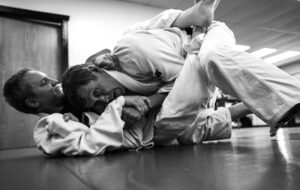
Failure is unavoidable in martial arts. You will lose rounds. You will forget techniques. You will feel behind others at times. Many people see these moments as signs to stop. Champions see them as part of the path.
The difference between those who quit and those who grow is not talent or physical ability. It is mindset. A strong martial arts growth mindset turns failure into fuel rather than frustration. Training teaches you that losing is not the opposite of progress. It is often the doorway to it.
This article explores why failure is essential in martial arts, how it builds resilience, and how repeated setbacks shape a mindset that lasts far beyond training.
Why failure is guaranteed in martial arts
Martial arts places you in direct comparison with others. You spar. You compete. You train with people of different sizes, strengths, and experience levels. Failure is built into the system.
This exposure is intentional. It reveals weaknesses honestly. There is no hiding from mistakes when technique breaks down or timing fails.
For many beginners, this is uncomfortable. But discomfort is the environment where mental growth in training happens. Without failure, learning would be shallow.
Failure strips away illusion
In martial arts, failure removes false confidence quickly. Techniques that work in drills may fail in live rounds. Strength may disappear under fatigue.
This exposure forces humility. It teaches you to respect fundamentals and stay curious.
When illusion fades, real learning begins. This is the foundation of a champion mindset.
To understand how discipline supports this process, revisit The Warrior’s Mind: How Martial Arts Strengthens Mental Discipline.
Learning from defeat builds resilience
Resilience is not built by winning constantly. It is built by recovering after loss.
Learning from defeat means reviewing what happened without self attack. You identify gaps. You adjust training. You return with intention.
Each recovery strengthens emotional control. You learn that setbacks do not define you. Your response does.
This cycle is how resilience after loss becomes automatic.
If fear of failure limits your training, see From Fear to Focus: Developing Mental Resilience Through Martial Arts.
Failure teaches patience
Progress in martial arts is rarely smooth. Plateaus appear. Skills regress temporarily. Improvement comes in waves.
Failure teaches patience because it slows you down. It forces you to respect timing and consistency.
This patience supports long term development. Fighters who rush often burn out. Fighters who accept failure stay in the game.
Patience is a quiet strength that defines champions.
Ego is challenged through loss
Ego struggles with failure. It seeks validation and comparison.
Martial arts challenges ego constantly. You lose to smaller opponents. You struggle with basics. You are corrected publicly.
When ego softens, learning accelerates. Feedback becomes valuable instead of threatening.
This humility strengthens the martial arts growth mindset and keeps progress alive.
Failure creates adaptability
Champions are not perfect technicians. They are adaptable problem solvers.
Failure forces adaptation. When one approach fails, you adjust. When strength is not enough, you refine technique. When speed fails, you improve timing.
This adaptability is trained through repeated failure and recovery.
Over time, you become comfortable with uncertainty. This comfort is power.

Mental toughness is forged through setbacks
Mental toughness is not built through comfort. It is built through challenge.
Each failed attempt tests emotional regulation. Each loss tests discipline. Each difficult session tests commitment.
Those who endure develop a never give up mentality grounded in experience rather than slogans.
Mental toughness becomes part of identity.
For insight into emotional regulation during setbacks, read Master Your Emotions: How Martial Arts Teaches Control and Patience.
Failure improves focus
When failure occurs, attention sharpens. You become more aware of details.
You start noticing posture, distance, and timing more carefully. Failure refines focus.
This heightened awareness accelerates learning and improves execution.
Failure becomes feedback that guides attention.
Champions redefine success
Champions do not define success by winning alone. They define success by growth.
A session where you identify a weakness is valuable. A round where you stay calm under pressure is progress.
This redefinition protects motivation during difficult phases.
Success becomes internal rather than dependent on outcomes.
Failure builds trust in the process
When you survive failure repeatedly, trust grows. You trust that effort leads somewhere, even if results are delayed.
This trust supports consistency. You keep training without constant reassurance.
Trust in the process is one of the strongest competitive advantages a martial artist can have.
Avoiding failure limits growth
Avoidance feels safe but limits development. Choosing only easy partners or avoiding competition delays learning.
Martial arts rewards those who face discomfort intentionally.
Facing failure expands skill. Avoiding it shrinks potential.
This lesson applies equally to life challenges.
Failure strengthens character beyond training
The mindset developed through martial arts failure transfers into daily life.
Work setbacks become manageable. Personal challenges feel less overwhelming. You recover faster emotionally.
This resilience supports broader personal growth, as discussed in Why Martial Artists Excel in Life: Lessons Beyond the Dojo.
How to use failure productively
Failure becomes useful when approached correctly.
Reflect without emotion. Identify one adjustment. Apply it in training.
This simple cycle transforms loss into learning.
Avoid rumination. Focus on action.
Failure does not disappear at higher levels
Advanced practitioners fail differently, not less often. The challenges become more subtle.
Refinement replaces basics. Margins tighten. Pressure increases.
The relationship with failure remains essential throughout the journey.
Champions never outgrow failure. They outgrow fear of it.
Final thought: failure is the forge
Failure is not an obstacle on the martial arts path. It is the forge that shapes it.
A strong martial arts growth mindset transforms loss into wisdom, frustration into patience, and setbacks into resilience.
Champions are not those who avoid failure. They are those who face it, learn from it, and return stronger every time.
Train with humility. Fail with purpose. And let each setback sharpen the mindset that defines true mastery.