People often notice that martial artists carry themselves differently. They speak with calm confidence, handle pressure well, and remain steady when situations become stressful. This is not accidental. Martial arts does far more than teach physical skills. It shapes how a person thinks, responds, and grows.
The most valuable life lessons from martial arts are learned quietly over time. They show up in work ethic, relationships, decision making, and self respect. Training becomes a blueprint for life, teaching you how to face challenges without panic and progress without shortcuts.
This article explores why martial artists often excel outside the dojo and how the mindset developed in training creates long term success.
Discipline that carries into daily life
Discipline in martial arts is not forced. It is built through repetition. You show up on schedule. You follow structure. You respect the process even when motivation fades.
That same discipline transfers naturally into everyday responsibilities. Martial arts discipline in daily life improves time management, consistency, and reliability. Tasks no longer feel overwhelming because training has already taught you how to break effort into manageable steps.
You learn that progress comes from doing small things well, repeatedly.
To understand how this discipline forms mentally, read The Warrior’s Mind: How Martial Arts Strengthens Mental Discipline.
Learning to stay calm under pressure
Pressure reveals character. Martial artists train in environments where mistakes are visible and consequences are immediate. This exposure builds emotional stability.
Instead of panicking, you learn to breathe. Instead of reacting impulsively, you pause and assess. This calm response becomes second nature.
In professional and personal situations, this ability is powerful. Martial artists tend to handle conflict, deadlines, and unexpected problems with clarity. This calm is a cornerstone of a strong success mindset.
Failure becomes feedback, not defeat
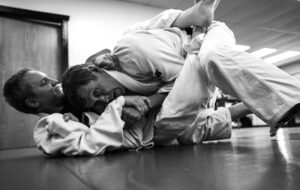
In martial arts, failure is unavoidable. You get submitted. You miss techniques. You lose rounds. These moments teach resilience.
Resilience training happens every time you return after a difficult session. You learn that failure is not a verdict on your ability. It is information.
This mindset shifts how you approach life. Setbacks become lessons. Mistakes become adjustments. Quitting no longer feels like an option.
Patience replaces urgency
Modern life rewards speed, but martial arts rewards patience. Progress takes time. Skills develop slowly. There are no shortcuts.
This teaches delayed gratification. You learn to invest effort now for results later. That patience carries into career growth, relationships, and personal goals.
Martial artists understand that rushing often creates mistakes. Steady effort creates mastery.
Respect shapes better relationships
Respect is deeply ingrained in martial arts culture. Respect for instructors, training partners, and the learning process creates a healthy environment.
This respect extends outward. Martial artists tend to listen more and react less defensively. They value boundaries and mutual growth.
Respect also includes self respect. Training teaches you to protect your body, manage ego, and set standards for how you show up in life.
Confidence built on competence
Confidence earned through training is different from surface level confidence. It is quiet and stable.
As you develop skill through repetition, belief grows naturally. Personal growth occurs because confidence is tied to effort, not validation.
This confidence shows up in how martial artists speak, move, and make decisions. It is not loud. It does not need approval.
Emotional control improves decision making
Training exposes emotional triggers. Frustration, fear, and impatience surface regularly.
Martial arts teaches emotional regulation. You learn to feel emotions without acting on them. This leads to better choices under stress.
In life, emotional control prevents impulsive decisions and unnecessary conflict. It allows you to respond thoughtfully rather than react emotionally.
Consistency beats talent
Martial arts quickly reveals that talent alone is not enough. The most consistent practitioners improve the most.
This lesson applies everywhere. Showing up consistently matters more than being naturally gifted. Effort compounds.
Martial artists often succeed because they trust routine. They do the work even when results are not immediate.
Humility keeps growth alive
Training constantly reminds you that there is always more to learn. No matter how skilled you become, someone else can challenge you.
This humility prevents stagnation. It keeps you curious and open minded.
In life, humility improves learning, leadership, and communication. It allows you to grow without ego blocking progress.
Structure creates freedom
Martial arts training follows structure. Warm ups, drills, rounds, and cooldowns create order.
This structure creates freedom. When the basics are automatic, creativity emerges. The same principle applies in life.
Routines free mental energy. Discipline creates options rather than limits.
Responsibility builds self trust
Martial artists are responsible for their training. No one can do the work for you.
This responsibility builds self trust. You learn that effort leads to results. You trust yourself to follow through.
This self trust supports independence and confidence outside the dojo.
Training becomes a way of living
Over time, martial arts stops feeling like an activity and starts feeling like a way of living. The mindset becomes automatic.
You face challenges with patience. You stay calm under pressure. You commit to growth.
These habits define success more than any technique ever could.
Final thought: success begins on the mat
The reason martial artists excel in life is simple. Training teaches them how to struggle productively.
The life lessons from martial arts shape discipline, resilience, focus, and character. These qualities apply everywhere.
When you train the body with intention and the mind with patience, success becomes a natural outcome, both on and off the mat.